
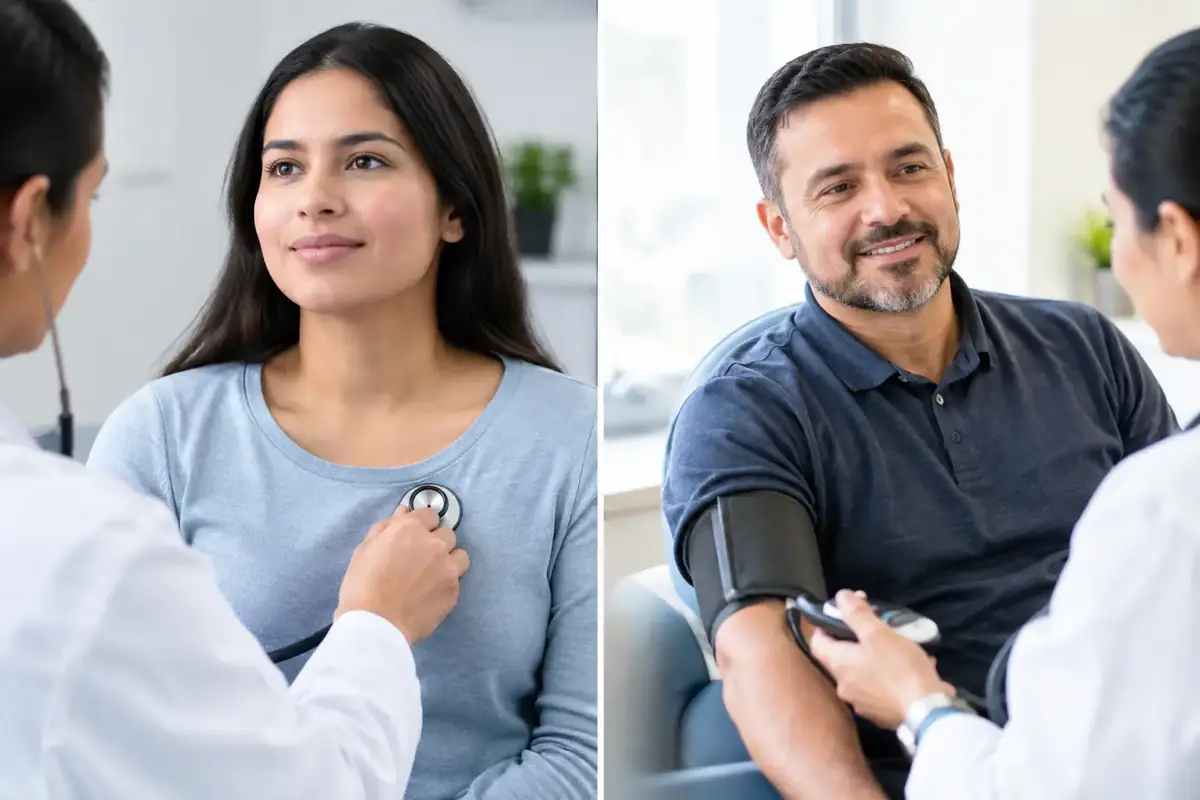
A USCIS physical versus regular checkup can feel confusing because both visits involve your health history, an exam, and sometimes lab work. But they serve very different purposes. A routine checkup is designed to protect and improve your long-term health. A USCIS immigration medical exam is a specific federal requirement that documents whether an applicant meets immigration health standards.
Knowing the difference helps you schedule the right visit, bring the right records, and avoid preventable delays with your immigration paperwork.
The Main Difference: Purpose
A regular checkup, often called an annual wellness visit or preventive exam, focuses on you as a patient. Your clinician may review your medications, blood pressure, weight, sleep, mood, family history, and health goals. The visit is an opportunity to identify concerns early and create a care plan that makes sense for your life.
A USCIS physical has a narrower purpose. It is completed for immigration documentation and follows rules set by the U.S. government. The examining provider must be a USCIS-designated civil surgeon. The exam helps determine whether a medical condition of public health significance or another health-related issue affects admissibility under immigration rules.
That distinction matters. A recent annual physical does not replace an immigration medical exam, even if you are healthy and had lab work done recently. Likewise, an immigration physical is not a substitute for ongoing primary care.
USCIS Physical Versus Regular Checkup: What Is Included?
Both appointments may begin with basic information such as your medical history, medications, allergies, prior surgeries, and immunization history. After that, the paths separate.
What happens at a regular checkup
During a routine visit, your provider can tailor the exam to your age, symptoms, medical history, and preventive-care needs. They may order blood work to check cholesterol, blood sugar, thyroid function, anemia, or other concerns. They may discuss cancer screenings, nutrition, exercise, stress, sexual health, or management of chronic conditions such as high blood pressure and diabetes.
A regular checkup also gives you room to ask questions that do not fit into a compliance exam. If you have been tired for months, are gaining weight unexpectedly, need help managing medications, or want to discuss preventive screenings, this is the right setting.
The goal is a clear plan for your health, including follow-up care when needed.
What happens at a USCIS immigration medical exam
The immigration exam follows a required process and uses USCIS forms. The civil surgeon reviews your medical history and vaccination record, performs a physical and mental-status evaluation, and orders or reviews any required testing. The exact requirements can vary based on age, medical history, and current CDC technical instructions.
Applicants may need testing for conditions specified by federal immigration rules, such as tuberculosis and syphilis. Some applicants may also need gonorrhea testing. Vaccination requirements are evaluated according to the applicant’s age and the current immigration schedule.
The civil surgeon documents the results on Form I-693, Report of Immigration Medical Examination and Vaccination Record. After the exam is complete, the form is typically provided in a sealed envelope for submission as instructed by USCIS. Do not open a sealed packet unless you are specifically told to do so, since an opened envelope may not be accepted.
The Provider and Paperwork Are Not Interchangeable
A primary care clinician can provide excellent preventive care, diagnose health conditions, and help you stay current with routine screening. However, only a designated civil surgeon can complete the official immigration medical paperwork.
This is one of the most practical differences between a USCIS physical versus regular checkup. The immigration visit is not simply about whether you feel well. It is also about accurate documentation, required signatures, vaccine review, testing protocols, and correctly completed forms.
For this reason, choosing a clinic that routinely handles immigration exams can make the process easier. At UCO Medical Clinic, patients can receive a physician-led evaluation, on-site lab collection when appropriate, and straightforward guidance on the documents still needed to complete the process.
What to Bring to Each Appointment
For a regular checkup, bring your insurance information if applicable, a photo ID, a current medication list, and any records or test results you want your provider to review. If you have a specific concern, write down when it started and what makes it better or worse. Small details can help your clinician make better decisions.
For a USCIS immigration medical exam, preparation is more document-focused. Bring a government-issued photo ID, your vaccination records, and any immigration paperwork the clinic asks you to bring. You should also bring records related to significant past illnesses, hospitalizations, treatment for tuberculosis, mental health treatment, substance-use treatment, or prior positive test results when applicable.
If you do not have vaccination records, do not assume the appointment cannot move forward. The civil surgeon can explain which vaccines may be required, whether a blood test may help document immunity in some situations, and what next step fits your record. Requirements can change, so follow the clinic’s current instructions rather than relying on a friend’s experience or an old online checklist.
Can an Immigration Physical Find a Health Problem?
It can, but that is not its primary role. The exam may identify an issue that needs medical follow-up, such as elevated blood pressure, symptoms of infection, or missing vaccinations. If that happens, it is wise to address it promptly with a primary care provider.
Still, immigration medical exams are not designed to provide the depth of preventive care offered during a regular checkup. They generally do not include a personalized plan for cholesterol management, weight changes, recurring headaches, menopause symptoms, testosterone concerns, or long-term diabetes prevention unless those concerns require attention within the exam process.
Many patients benefit from treating the two visits as complementary. The immigration exam handles the required documentation. A routine checkup supports the health you will live with long after the paperwork is submitted.
Timing Matters More Than Most People Expect
Do not schedule an immigration medical exam at the last possible minute. You may need time to locate vaccination records, complete required lab testing, receive a needed vaccine, or return for a follow-up item. Starting early gives you more options and reduces the stress of trying to coordinate medical records with filing deadlines.
A regular checkup should also be scheduled before a problem becomes urgent. Consistent preventive visits make it easier to track changes over time and keep chronic conditions from becoming harder to manage. For families balancing work, school, and immigration paperwork, having one trusted outpatient clinic can simplify both planned care and unexpected needs.
Frequently Asked Questions
Can I use my annual physical for USCIS?
No. Even a thorough annual physical cannot replace the official immigration medical exam because USCIS requires Form I-693 to be completed by a designated civil surgeon.
Does a USCIS physical include vaccinations?
The civil surgeon reviews your vaccine record and determines whether you meet applicable immigration vaccination requirements. If you need a vaccine or additional documentation, the clinic will explain the next steps.
Will my insurance cover an immigration medical exam?
Coverage varies by plan. Immigration medical exams are often treated differently from preventive care because they are completed for an administrative requirement. Ask about pricing and coverage before your visit so there are no surprises.
Should I still get a regular checkup if I completed an immigration exam?
Yes. The immigration exam has a specific legal and public-health purpose. A routine checkup is where you can address preventive screening, ongoing symptoms, medications, and long-term health goals.
A Clear Next Step
If you need immigration paperwork completed, schedule enough time to gather your records and ask the clinic what documents are needed before you arrive. If you also have personal health concerns, consider booking a separate routine visit so there is time for a full conversation and a clear treatment plan.
For patients in South Broward County, UCO Medical Clinic offers convenient appointments and clear guidance for immigration medical evaluations and everyday care. Bring your questions and records – getting the right exam should feel organized, not overwhelming.


