
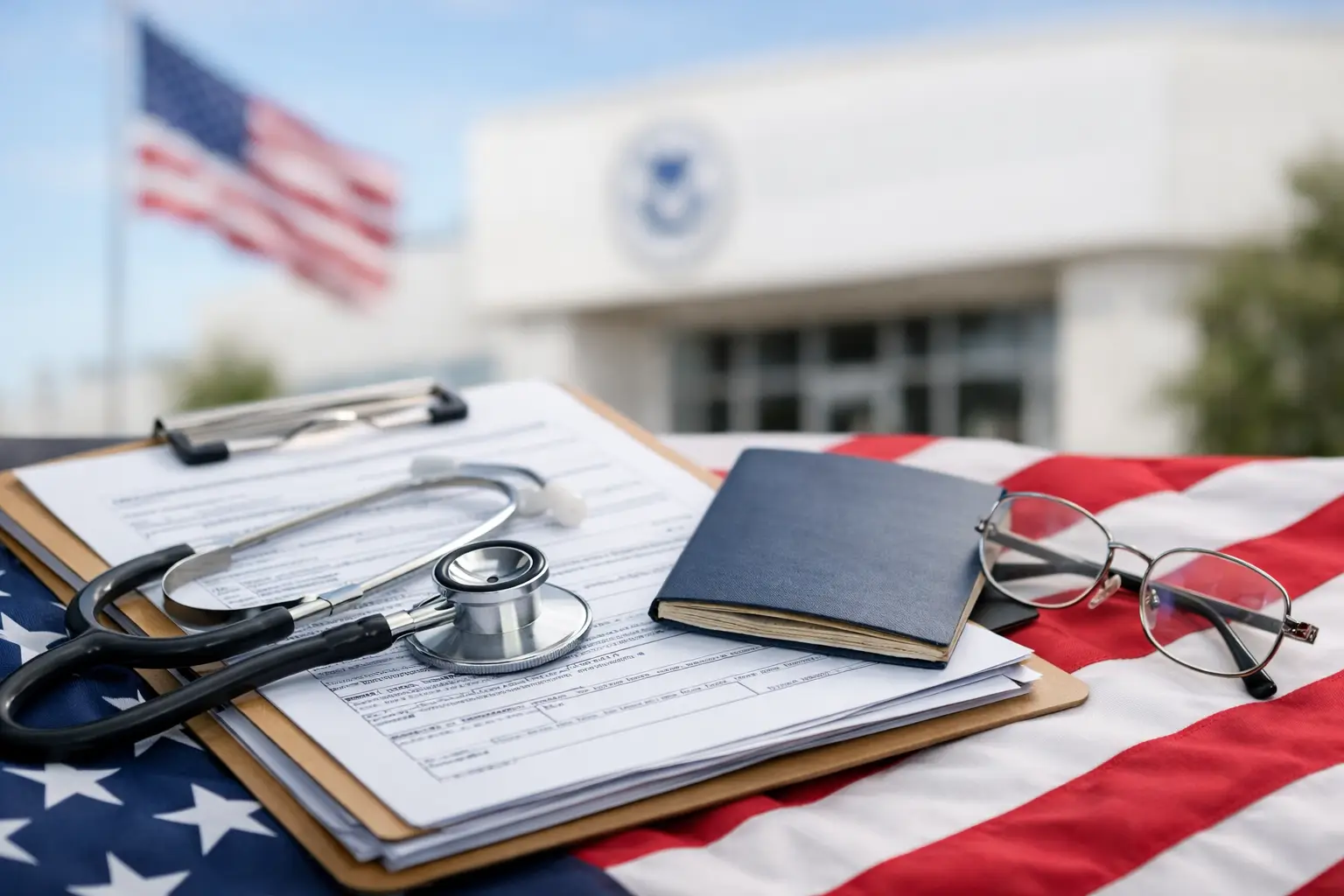
A missing vaccine record or an unopened sealed form can create a frustrating delay in an immigration case. This guide to immigration medical paperwork explains what to gather before your appointment, what your medical provider will complete, and how to protect the documents after your visit.
An immigration medical exam is not the same as a routine checkup. It follows specific U.S. Citizenship and Immigration Services, or USCIS, requirements, and the paperwork matters just as much as the exam itself. A little preparation can help make the appointment faster, clearer, and less stressful.
Start With the Correct USCIS Form
For most applicants applying for adjustment of status in the United States, the required medical documentation is Form I-693, Report of Immigration Medical Examination and Vaccination Record. USCIS periodically updates its forms, so use the current version listed in your application instructions or confirm the version with the clinic before your appointment.
Do not complete every section on your own. You may be asked to fill out basic personal information and sign designated parts of the form, but the medical sections must be completed by a USCIS-designated civil surgeon. Signing a section too early, using an outdated form, or making corrections after the provider has completed it can cause problems.
If you are applying through a U.S. consulate outside the country, your process may be different. Those exams are generally completed by a panel physician authorized by the U.S. Department of State, not a civil surgeon. Your visa instructions should tell you which process applies.
Guide to Immigration Medical Paperwork: What to Bring
Bring original documents whenever possible, along with clear copies if requested. The most useful item is a valid government-issued photo ID, such as a passport, driver’s license, state ID, or other acceptable identification. The name and date of birth should match the information used in your USCIS application.
You should also bring your vaccination records. These may come from a childhood immunization card, a prior doctor, a school record, a pharmacy, a public health department, or another healthcare provider. Records from outside the United States can still be helpful if they clearly show your name, the vaccine received, and the date it was given.
If a record is not in English, bring a complete English translation. The translation should accurately reflect the medical document so the provider can determine whether the vaccine history meets USCIS requirements. A partial translation or an informal summary may not provide enough detail.
Bring any paperwork the clinic asks you to complete before the visit, as well as relevant medical records. This can include prior chest X-ray reports, documentation of treatment for tuberculosis, hospital records for a significant medical condition, or medication lists. Not every applicant needs these items, but they can be especially important when there is a history of a condition that requires additional review.
If you have already filed your immigration paperwork, a copy of your receipt notice or other case information may be useful. Ask the clinic in advance whether it is needed for your appointment. Requirements can vary based on your case and the services provided.
Why Vaccine Records Matter So Much
Vaccination documentation is one of the most common reasons an immigration medical visit takes longer than expected. The civil surgeon must assess whether you have received vaccines required for your age under current USCIS and Centers for Disease Control and Prevention guidance.
Your provider can only document vaccines that are supported by acceptable records, medical evidence of immunity when appropriate, or vaccines administered during the visit. Saying that you had a vaccine years ago is understandable, but it usually is not enough for the form.
When records are incomplete, you may have options. Depending on your age, health history, and the vaccine involved, the provider may recommend receiving a needed vaccine, ordering a blood test to document immunity, or recording an appropriate waiver when one applies. The right path depends on the individual and the current requirements. It is not always necessary to repeat every vaccine, but waiting until the last minute to sort this out can delay your final paperwork.
Be Honest About Medical History
The immigration medical exam includes questions about your health history, medications, prior surgeries, mental health history, substance use, and past treatment for certain conditions. Answer accurately and directly. The purpose is to complete the required medical assessment, not to judge you for having received care.
Bring a list of your current medications with the dose and prescribing provider, especially if you take medication for a chronic condition. If you have records related to previous tuberculosis testing or treatment, bring those as well. A prior positive test does not automatically mean there is a current problem, but it may require additional evaluation or documentation.
Some findings require follow-up testing, a chest X-ray, referral, or more records before the form can be completed. This can feel discouraging, particularly if you have a filing deadline. Still, it is better to complete the evaluation correctly than to submit incomplete paperwork that may lead to a request for more evidence later.
Understand the Sealed Envelope Rule
After the medical exam is complete, the civil surgeon typically gives you the completed Form I-693 in a sealed envelope for USCIS. Do not open it. USCIS may reject or question an envelope that appears opened, altered, or damaged.
Ask for a copy of the completed form for your personal records before you leave. Keep that copy in a safe place along with your vaccination documentation and payment receipt. The copy can help you remember what was completed and may be useful if you need to discuss your case with an attorney or review information later.
The sealed envelope should be submitted according to your USCIS filing instructions. Some applicants submit it with the initial application, while others bring it to an interview or submit it after USCIS requests it. Immigration procedures can change, and case-specific directions matter. A medical clinic can explain the exam process, but legal questions about when and how to file should be addressed with USCIS instructions or a qualified immigration attorney.
Common Paperwork Mistakes to Avoid
The easiest way to avoid delays is to treat your immigration medical documents like official records, not ordinary clinic papers. Check your name, date of birth, and identifying information before signing. Tell the clinic right away if anything is misspelled.
Avoid these common problems:
- Bringing no photo identification or bringing an expired document.
- Leaving vaccine records at home because they are old, foreign, or not in English.
- Completing or signing sections of Form I-693 before being instructed to do so.
- Opening the sealed envelope after the medical exam.
- Assuming a previous physical or routine lab work can replace the USCIS medical examination.
A well-organized folder can make a real difference. Keep your ID, vaccine records, translated documents, medication list, appointment instructions, and any prior relevant test results together. If you are helping a parent, spouse, or older relative prepare, review the folder with them before leaving for the appointment.
FAQ
How long does immigration medical paperwork take?
The appointment itself may be completed in one visit, but the total timeline depends on whether you need lab testing, vaccinations, additional records, or follow-up evaluation. Bringing complete documentation gives you the best chance of avoiding extra steps.
Can I use vaccine records from another country?
Yes, records from another country may be accepted if they are clear and include the relevant vaccine names and dates. An English translation may be needed when the original record is in another language.
What if I do not have any vaccine records?
Tell the clinic before or at your appointment. The provider can review the available options based on your age, medical history, and USCIS requirements. You may need certain vaccines, blood testing for immunity, or both.
Can I submit the I-693 form myself after the exam?
Follow the instructions for your specific USCIS case. If the civil surgeon gives you a sealed envelope, do not open it before submitting it as directed. Keep your personal copy separate from the sealed packet.
Does an immigration medical exam replace primary care?
No. It is a specific compliance exam with defined USCIS requirements. If the evaluation identifies a health concern, continuing care with a primary care clinician may be appropriate.
UCO Medical Clinic helps patients prepare for immigration medical exams with clear instructions, multilingual communication, and a straightforward review of the documents needed before the visit. Call ahead if you have vaccine records, prior tuberculosis testing, or medical history that may need extra review so the team can help you arrive prepared.
Taking time to organize your documents before the appointment can spare you unnecessary repeat visits and help you move forward with greater confidence.


